Meat · Breed · Short entry
Alentejana
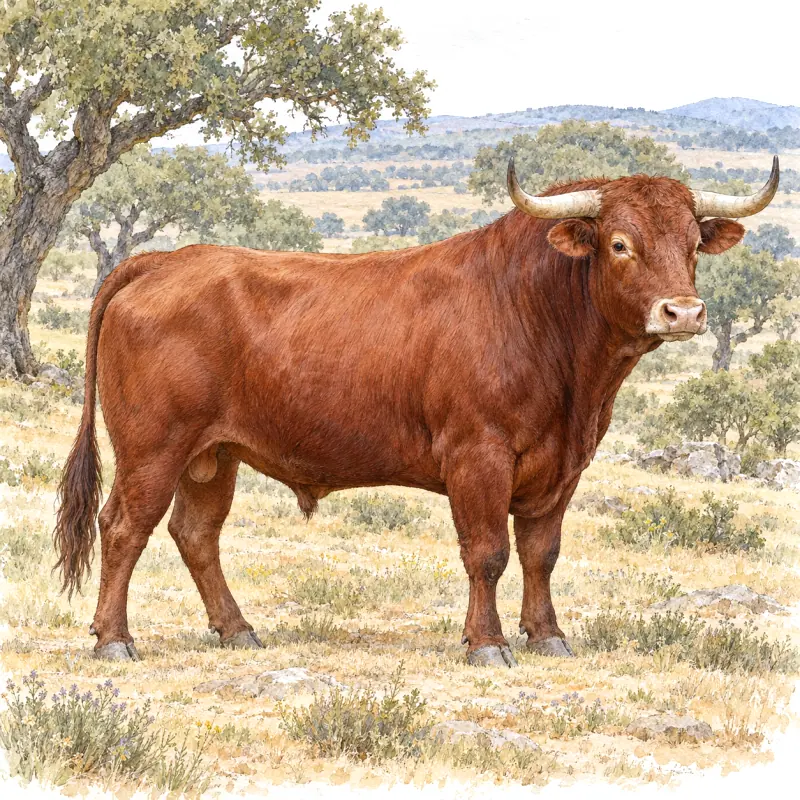
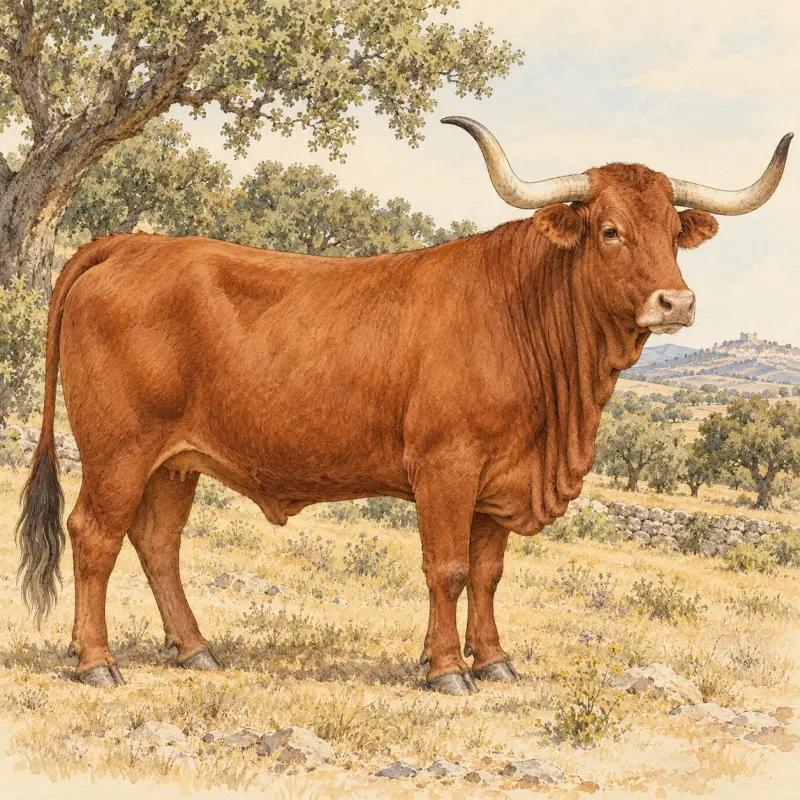
The red cattle of the Alentejo in southern Portugal, with large horns and a deep dewlap of seven folds that helps them shed heat. Long a working breed, it was later selected for meat. Its beef is protected as Carnalentejana DOP, from calves suckled for six to nine months and raised under holm and cork oaks.
Built for the Alentejo summer
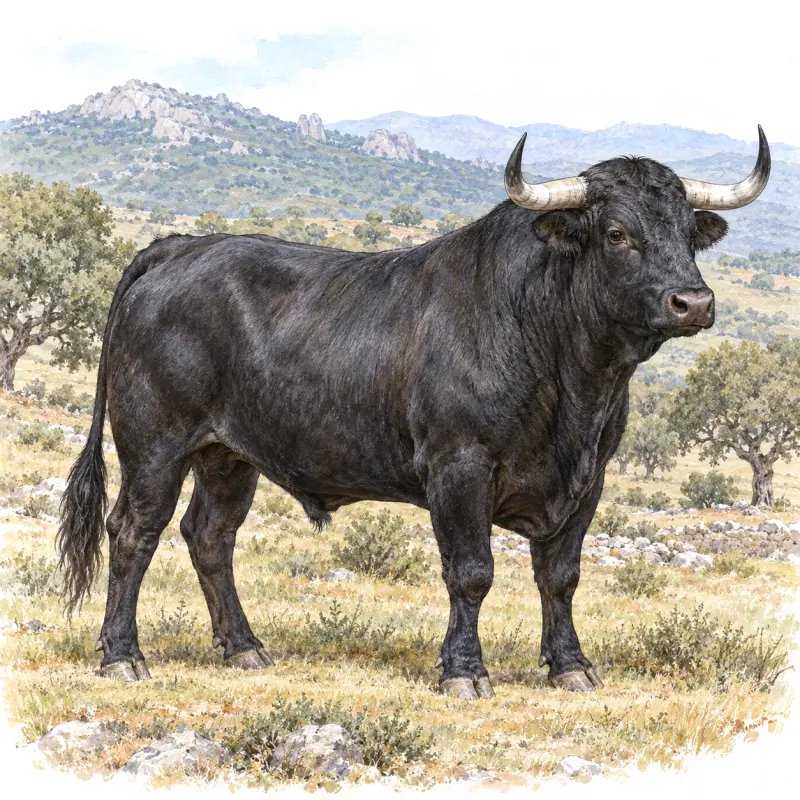
DGAV describes the Alentejana as long adapted to a hot, dry region. Poor pasture favoured a large digestive capacity. The large dewlap and deep chest increase the body surface and allow slow, deep breathing in the heat. The coat is a solid red, from deep retinto to wheaten trigueiro. Animals with white or black hairs are excluded, except in the tail switch, and the natural openings are pink. The horns are large and symmetrical, dirty white with darker tips. They grow back, then down, then forward.
The breed was mainly a working animal. Selection for meat followed mechanisation, and in the second half of the twentieth century many farmers crossed it with imported breeds. In 2019 the herd book recorded 8,362 pure-bred females and 200 males with 133 breeders, mainly in the districts of Portalegre, Évora, Beja and Setúbal.
Carnalentejana DOP
Under the DOP, calves suckle their mothers until 6 to 9 months and are then raised extensively at low stocking rates. They graze mainly under holm and cork oak, with acorns as a feed reserve from autumn. The product sheet advises cooking the meat simply, with salt and olive oil, in dishes such as bifes à alentejana.
How it connects
Breed
- similar Retinta